
Short answer
Yes, Penglipuran is worth visiting if you want to understand how a traditional Balinese village is laid out and run, not just photograph it. It is calm, orderly and easy to walk. Go in the morning, when it is cooler and quieter, and go with a resident who can explain what you are looking at. A half day is enough.
| Where | Penglipuran Traditional Village, Bangli, Bali |
|---|---|
| Time needed | Half day |
| Activity level | Easy, flat village lanes and garden work |
| Best time | Mornings, cooler and quieter |
| Dress code | Shoulders and knees covered |
| Group size | Flexible, from small groups to large teams |
What makes Penglipuran different from other villages in Bali?
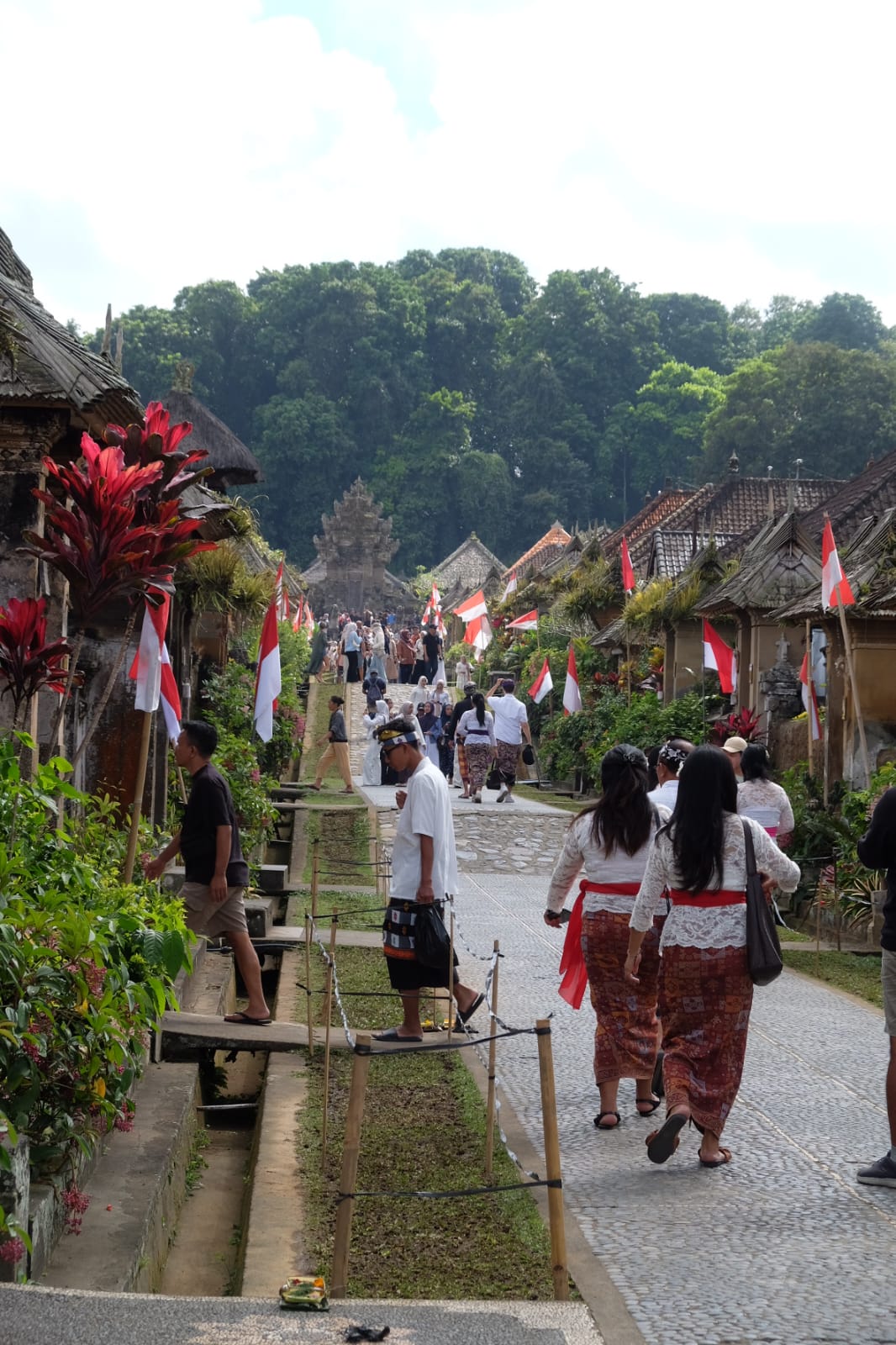
Most visitors notice the order first. A single stone-paved main lane runs up a gentle slope, lined on both sides by family compounds with near-identical gateways. The lane is kept free of traffic and litter, and it stays that way because of village rules and shared work, not an outside cleaning contract.
That order is the point. The layout follows a traditional idea of how sacred, living and outer spaces should relate to each other, with the temple at the higher end. Once someone explains it, the street stops looking like a film set and starts reading like a plan.
Is it too touristy?
It is well known and it does get busy, especially later in the day. That is the honest trade-off. People still live in every compound you walk past, so it is not a museum, but you will share the lane with other visitors.
Two things make a real difference:
- Arrive in the morning. It is cooler and noticeably quieter.
- Walk with a resident. Without context you see tidy gateways. With context you understand why they look the same and who decides.
Penglipuran Village & Tree Planting: Half day, Penglipuran Traditional Village, Bangli, Bali.
See the tourWhat do you actually do there?
On our Penglipuran Village & Tree Planting programme, you meet a local host at the entrance for an orientation, then walk the main lane and compounds with commentary on architecture and community-led spatial planning.
After the walk, the group moves to the Sekar Anugrah garden to learn about growing media and planting technique, and plants together. Everyone pots a seedling to take home, with care instructions. The morning closes with a traditional Balinese lunch and a conversation.
Does the tree planting matter, or is it a photo stop?
It is a fair question to ask of any planting activity. Here the planting is run with the Sekar Anugrah garden, which handles the ongoing care and monitoring of what groups plant after they leave. That follow-up is what separates a planting programme from a photo opportunity.
It also changes how the visit feels. You leave having done something with the village, rather than only walking through it.
How should you dress and what should you bring?
Penglipuran is a living village with active temples, so dress modestly: shoulders and knees covered. Beyond that, keep it practical:
- Comfortable walking shoes
- A refillable water bottle
- A light rain layer in the wet season
If you are unsure what season you will be travelling in, our Bali seasonality guide is a quick way to check.
Who is it not worth it for?
If you are after beaches, nightlife or dramatic landscapes, Penglipuran will feel quiet. It rewards curiosity about how people organise their lives, and it asks for a slow pace. If you only have a few hours in Bali and want big scenery, spend them elsewhere.
Is this right for you?
Good for
- Travellers curious about Balinese architecture and village life
- Families and mixed-age groups, since the walking is flat and easy
- Company teams wanting a calm day with a hands-on planting component
- Anyone who prefers an early, unhurried start
Not for
- People mainly looking for beaches or dramatic scenery
- Visitors who want a crowd-free village with no other tourists at all
- Anyone unwilling to dress modestly for temple areas
Frequently asked questions
How long do you need at Penglipuran Village?
A half day is enough for most people. That covers a guided walk along the main lane and compounds, and on our programme, a tree planting session at the Sekar Anugrah garden followed by a Balinese lunch. Staying longer adds little unless you have a specific interest.
What is the best time of day to visit Penglipuran?
Morning. It is cooler, the light is softer, and the main lane is quieter before the busier part of the day. We also avoid major ceremony days unless a group specifically asks to time a visit around one.
Where is Penglipuran Village?
Penglipuran is in Bangli regency, in Bali's cooler upland interior. Travel time depends on where you are staying, so we confirm the timing when you share your dates and pick-up area.
Is Penglipuran suitable for children or older travellers?
Yes. The village lanes are flat and the garden work is light, so the activity level is easy. Planting and potting a seedling to take home tends to keep younger children engaged, and there is time to rest over lunch.
How much does the Penglipuran tour cost?
We quote per group, because the price depends on group size, dates and transport. Village entry, the community contribution, planting materials, a seedling and lunch are included. Share your dates and headcount through the tour page and we will send a quote.