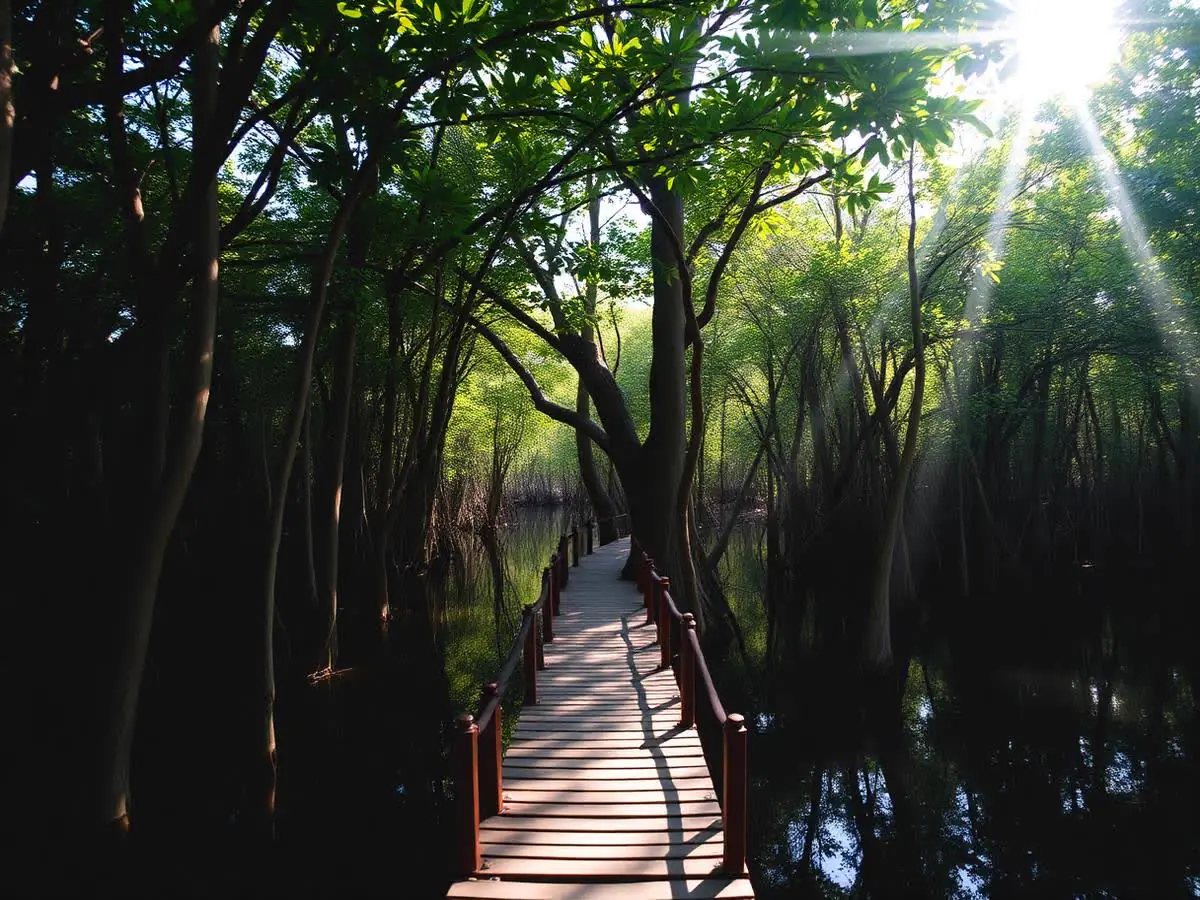
There is a stretch of coastline on the eastern edge of Denpasar that most travelers never see. No infinity pools, no cliff bars. Just a low tangle of mangrove roots, black mud that sucks at your ankles, and, if you're quiet, the papery rustle of crabs moving sideways through the shade. This is where we start most of our conservation days, and it's where our thinking on carbon has been quietly rearranged over the last few years.
For a long time, 'offsetting a trip' meant clicking a checkbox on a booking page and trusting that trees would appear in a forest you'd never visit. The problem is that a lot of those trees never do, and the ones that do often burn, get cut, or are counted twice. When you walk a mangrove restoration site with the people who planted it, you stop believing in the checkbox.
Why coastal ecosystems punch above their weight
Mangroves are what scientists call a 'blue carbon' ecosystem. They store carbon not just in leaves and wood, but in the waterlogged mud below them, mud that can hold onto that carbon for centuries if it isn't disturbed. Hectare for hectare, coastal wetlands sequester several times more carbon than tropical rainforest, and they do it quietly, without needing to be marketed.
- They buffer the coast against storm surge and erosion, the kind of protection that becomes more important, not less, every year.
- They act as a nursery for the fish and crab species local families still depend on.
- They filter runoff before it reaches the reef, which is part of why the reefs offshore of restored mangrove sites tend to recover faster.
What we've actually seen on the ground
Our partner, Yayasan Svarga Bhumi Nusantara (SBN Foundation), runs the restoration plot we visit. They started with a degraded stretch that had been cleared decades ago for shrimp ponds, the classic story across Southeast Asia. Bringing it back is slow work. Seedlings die. Tides shift. Some plots need to be replanted three or four times before they hold.
"People think restoration is about planting. Most of it is about coming back, checking, replacing, adjusting. The plants are the easy part."
So what does this mean for a traveler?
If you're going to spend money 'offsetting' a Bali trip, we'd rather you spend a morning in the mud than press a checkbox. Not because a morning in the mud cancels out your flight, it doesn't, and anyone who tells you otherwise is selling something, but because it changes what you believe an offset is. It stops being an abstraction and starts being a place, a ranger, a plot number, a slow rate of return.
That shift is the point. It's the difference between paying for a promise and knowing where the work happens.